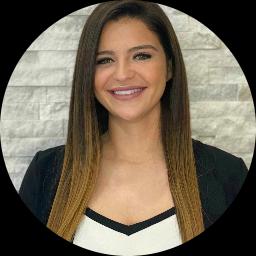
Victoria Naginsky
LMHC, LPCC
Compassionate, practical therapy for stressful times
- Trauma-informed approach
- Skill-based strategies
- Warm client-centered care
About Victoria
Victoria uses clear, concrete strategies alongside attentive listening. She often combines client-centered conversations with cognitive behavioral tools to help people notice thoughts and change unhelpful patterns. She also draws on dialectical skills and emotion-focused ideas to help regulate intense feelings and improve relationships.
Her approach focuses on short-term goals and skills you can use between sessions. She talks through specific problems, helps set achievable steps, and checks in on what’s working. Sessions balance empathy with direction so people leave with both understanding and action.
Victoria has nine years of clinical experience and holds LMHC and LPCC credentials. She practices in Florida and speaks English. She works with a wide range of concerns including addictions, trauma and abuse, family and relationship difficulties, sleep problems, anger, career stress, and mood conditions such as bipolar disorder.
People who prefer practical tools paired with thoughtful listening tend to find her style helpful. To begin, prospective clients complete a short questionnaire to match with a therapist and then schedule sessions according to availability. The subscription used for sessions can be canceled at any time.
Approaches used in online work and how they help
Victoria commonly uses Trauma-Focused Therapy, Client-Centered Therapy, and Cognitive Behavioral Therapy in her work. Trauma-Focused Therapy aims to address the emotional and practical impacts of traumatic experiences through paced processing and stabilization techniques. Client-Centered Therapy focuses on listening, understanding, and responding to what matters most to the person in the room. Cognitive Behavioral Therapy helps people identify unhelpful thoughts and practice new behaviors to reduce distress and improve daily functioning.Choosing the right approach is a collaborative process. The therapist will discuss your goals, preferences, and needs, then help decide which methods to emphasize. That teamwork helps shape therapy so it fits your situation and evolves as you make progress.
If you are considering online sessions, confirm the current session options before booking since formats are not specified here. Online work can make it easier to fit therapy into busy days, allow shorter check-ins when needed, and remove travel time. Many people find that remote sessions let them practice skills in the context of their daily routines and maintain continuity of care when schedules change.
These summaries are based on the profile information listed on BetterHelp. Listing trauma-focused therapy does not mean a therapist holds a specific certification such as TF-CBT, EMDR or CPT.
Areas of expertise
Primary focus
Also works with
Additional focus areas
Therapeutic approaches
Experience
9+ years
Credentials
Florida, Georgia, Virginia, Indiana, Ohio, Connecticut, Kentucky
Languages
English
Licenses listed
- LMHC, FloridaMH18669
- LPC, GeorgiaLPC015910
- LPC, Virginia0701015281
- LMHC, Indiana39005644A
- LPCC, OhioE.2606559
- LPC, Connecticut8863
- LPCC, Kentucky300446
- NPI1447846134
As listed on the therapist's profile. You can check a license with the state licensing board and an NPI in the national registry.
Frequently asked questions
What issues does she help with?
Victoria works with stress, anxiety, addictions, depression, trauma and abuse, grief, sleep problems, anger, career stress, relationship and family difficulties, and other related concerns.
How would you describe her therapeutic style?
Her style blends client-centered listening with practical techniques from cognitive behavioral therapy and dialectical behavior therapy, offering both understanding and concrete steps to try between sessions.
What kind of clinical experience does she have?
She brings nine years of clinical experience working with issues such as substance concerns, trauma, mood disorders, and family conflict.
What credentials and location are listed for this therapist?
She holds LMHC and LPCC credentials and practices in Florida.
Which languages are supported for sessions?
Sessions are offered in English.
Are international clients served?
International clients are not accepted at this time.
How does billing and cost work?
Cost varies with location and therapist availability; sessions use a subscription model that can be canceled at any time.
What are the first steps to begin therapy?
Start by selecting the Start Therapy button, complete a short matching questionnaire, and then schedule sessions according to the therapist's availability.
Therapists on BetterHelp do not prescribe medication; a doctor can talk with you about medical options. This directory is not a crisis service. If you are in immediate danger, call 911. If you are thinking about suicide, call or text 988.